
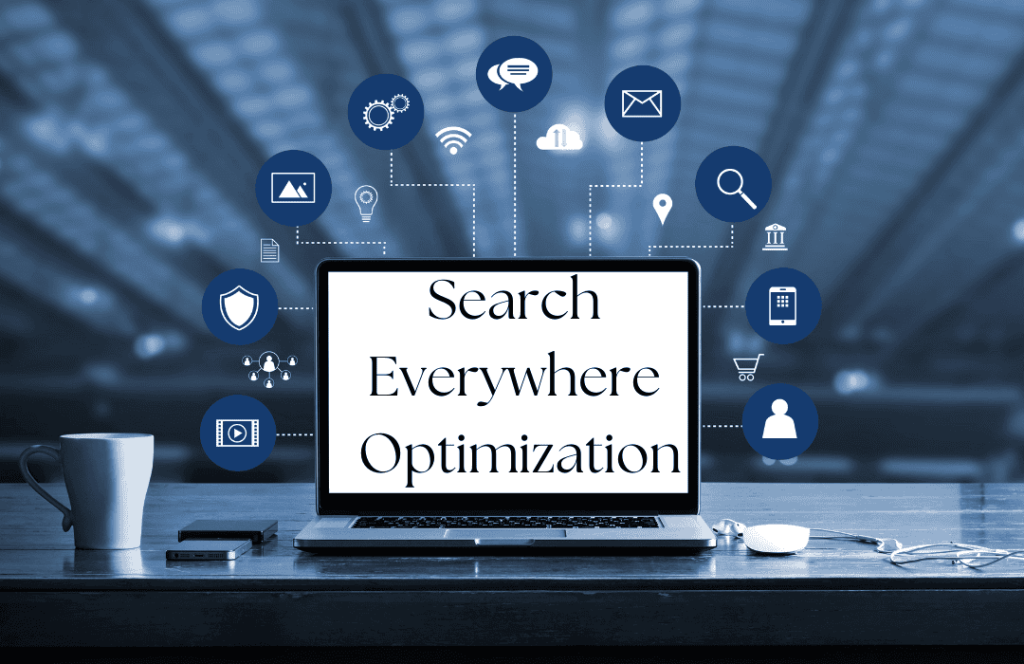
Search everywhere optimization is a strategy that looks beyond search engines.
It focuses on making your brand visible wherever people search, Google, social media, video platforms, local listings, and even paid ads.
Traditional SEO still matters, but relying on one channel limits growth.
Everywhere optimization pushes your reach across multiple touchpoints to drive more organic traffic, improve search optimization, and strengthen digital marketing results.
So, what is search everywhere optimization?
It is the practice of aligning your content, design, and campaigns with how users behave across channels. People search with different intent, some use voice, others type long-tail queries, others browse social platforms before making decisions.
By using everywhere optimization, you position your content to serve all these journeys.
The goal here is simple: improve visibility across channels, capture more users, and boost organic traffic with a connected SEO and digital marketing approach.
This article breaks down the platforms you need to optimize, practical steps to use, and strategies that improve performance.
What is Search Everywhere Optimization?
Search everywhere optimization means building visibility across all search touchpoints, not only search engines.
People look for answers on Google, YouTube, TikTok, local listings, voice assistants, and even inside social apps.
Each platform shapes user behavior differently. By aligning with this search landscape, you expand search engine visibility, capture intent across multiple formats, and drive consistent results.
Search everywhere optimization connects your content strategy to search queries and search intent at every stage of the user journey.
Instead of focusing on one channel, you design campaigns for how real people search, typed, spoken, or clicked. This creates a stronger digital footprint and makes search optimization part of every marketing effort.
Why Traditional SEO Alone is Not Enough
Classic SEO focused heavily on Google’s algorithm. You optimized pages, built backlinks, and expected organic traffic.
That worked when most searches happened in one place. Today, search behavior is fragmented. People explore local SEO results for stores nearby, global SEO for brands abroad, and social searches for reviews before buying.
Search engine results alone no longer guarantee exposure. Google’s SERP ranking is valuable, but algorithms now mix in maps, videos, and shopping results.
Without everywhere optimization, your domain authority may rise while your brand misses other opportunities. By expanding beyond one channel, you reduce dependence on a single platform and build stable traffic sources.
Core Principles of Search Everywhere Optimization
The foundation of everywhere optimization rests on three pillars: user intent, visibility, and performance.
- User intent: Every search query has a purpose, informational, transactional, or navigational. You need to align your content with this search intent to serve answers where users expect them.
- Visibility: Search engine index coverage matters, but so does presence across video platforms, local listings, and social feeds. Visibility means being present where attention exists.
- Performance: Website performance influences both SEO and user experience. Site architecture, crawlability, and usability ensure that your content is found, loaded fast, and engaged with.
Together, these principles expand your digital footprint and allow search everywhere optimization to outperform isolated campaigns.
Platforms You Need to Optimize for Search Everywhere Strategy
Search everywhere optimization requires building presence on more than one platform.
Each channel adds a layer of search engine visibility, reaching users where they spend time. From Google to TikTok to local listings, every platform has its own ranking rules and audience behavior.
Optimizing across these channels ensures your content distribution captures more organic traffic, strengthens brand visibility, and builds authority.
Search Engines – Google, Bing, and Beyond
Google dominates, but Bing, DuckDuckGo, and niche engines still serve millions of queries. A full search optimization plan addresses all of them.
Key actions:
- Use keyword research to map competitive keywords across platforms.
- Strengthen on-page SEO with metadata, title tags, and alt text.
- Apply schema markup and structured data to improve SERP features.
- Support off-page SEO with backlinks that grow domain authority.
- Fix technical SEO issues that reduce crawlability and indexation.
Local Listings and Maps
Local SEO drives visibility for service businesses and stores. Geo-targeting connects queries with nearby results, increasing relevance.
Steps to optimize:
- Claim and optimize your Google Business Profile.
- Use search console to check indexing of location pages.
- Add structured data for addresses, reviews, and hours.
- Analyze competitor strategies for local listings.
- Target audience segments with localized content.
Social Media Platforms
Social platforms now act like search engines. People use them for reviews, tutorials, and recommendations. Social media optimization makes your content visible here.
Focus areas:
- Post content marketing assets designed for shareability.
- Build brand visibility through consistent social signals.
- Engage with users to boost audience engagement.
- Track conversations to refine messaging and content strategy.
Video and Multimedia Platforms
YouTube, TikTok, and visual content searches rank high for enriched content. Video marketing captures users who prefer visual formats and drives strong search visibility.
Optimization tactics:
- Research competitive keywords for video platforms.
- Add metadata, transcripts, and closed captions for indexing.
- Design enriched content that encourages user engagement.
- Align video strategy with digital marketing campaigns.
Paid Search and Advertising Channels
Paid search adds reach to organic strategies. While SEO takes time, PPC, search engine marketing, and display advertising deliver immediate results.
Best practices:
- Align landing pages with search queries for higher conversion rates.
- Use remarketing to re-engage visitors.
- Run A/B testing to refine ads and content.
- Connect paid search with organic campaigns for full coverage.
Measuring the Success of Search Everywhere Optimization
Tracking progress is essential to know if your search everywhere optimization efforts pay off.
Success means better visibility across platforms, more traffic sources, higher engagement, and stronger ROI.
Using analytics tools, you can run web traffic analysis, review search performance, and connect online metrics with actual results.
Track Organic and Paid Visibility
Organic traffic reflects how well your site ranks across search engine results, while paid search measures return on ad spend. Both contribute to web traffic growth.
Key actions:
- Use analytics tools to separate organic traffic from paid campaigns.
- Review search engine index coverage to ensure all pages rank.
- Compare search engine results across platforms for keyword consistency.
- Watch for steady web traffic growth that signals optimization progress.
Monitor Engagement and Conversion Rates
High visibility is meaningless without user engagement and conversions. Conversion rate optimization ensures your audience journey turns visits into customer acquisition.
Practical steps:
- Track bounce rate to see if users leave quickly.
- Segment audiences to personalize campaigns.
- Map user journey for clearer conversion paths.
- Connect conversions with traffic sources for better ROI.
Evaluate Content Freshness and Updates
Search everywhere optimization needs content freshness to stay relevant. Outdated pages lose ranking and weaken content relevance. Regular content updates ensure your content lifecycle remains strong.
Checklist:
- Run content audits to find stale pages.
- Update meta data, links, and visuals regularly.
- Compare performance against search trends.
- Refresh high-traffic articles to extend lifespan.
Advanced Strategies for Search Everywhere Optimization
For advanced SEO practitioners, search everywhere optimization goes beyond the basics.
This stage focuses on semantic search, topical relevance, and information retrieval powered by modern search algorithms.
The goal is not only visibility but authority across every touchpoint.
Using Semantic SEO to Improve Context
Semantic SEO builds meaning around content. Instead of repeating the same keyword, you enrich content with keyword variations tied to search intent.
This improves search visibility and strengthens topical authority.
Apply competitive analysis to find related terms competitors miss. Use schema markup and structured data for better context delivery.
A semantic approach helps search algorithms connect your content with broader search queries.
Audience Segmentation and Targeted Campaigns
Audience segmentation ensures content reaches the right group. Instead of treating everyone alike, split your audience based on interests, demographics, or behaviors.
Use audience targeting for campaigns across search engines, social platforms, and email.
This creates personalized experiences that match search intent. The result is better user engagement, improved conversions, and stronger signals for search algorithms.
Final Thoughts – The Future of Search Everywhere Optimization
Search everywhere optimization is no longer optional. Businesses that depend only on classic SEO lose reach across channels where users actually search.
The future of digital marketing demands a broader focus that blends search optimization with content strategy, user engagement, and platform-specific performance.
When you embrace search everywhere optimization, you improve search rankings across engines, social feeds, video platforms, and local listings.
This creates consistent online visibility and strengthens your digital footprint. More importantly, it amplifies brand visibility and positions your business ahead of competitors who still rely on narrow SEO tactics.
Let SEOwithBipin help you dominate across platforms.
From content marketing to social signals and off-page SEO service, I’ll improve search rankings, boost brand visibility, and write content that ranks.
FAQs – Search Everywhere Optimization Explained
What is search everywhere optimization in simple terms?
Search everywhere optimization means making your brand visible across every platform where users search. Instead of relying only on Google, you optimize for search engines, local listings, social platforms, video sites, and even paid channels. The goal is to match search intent everywhere users look.
How is search everywhere optimization different from regular SEO?
Regular SEO focuses on ranking in search engines through on-page SEO, off-page SEO, and technical SEO. Search everywhere optimization adds social media optimization, video marketing, local SEO, and paid channels. It extends beyond Google to cover the entire search landscape.
Which platforms matter most for everywhere optimization?
Key platforms include:
Search engines like Google and Bing.
Local listings such as Google Business Profile.
Social media networks for social signals.
Video platforms like YouTube and TikTok.
Paid search channels including PPC and display advertising.
How does search everywhere optimization improve search rankings?
By aligning content strategy with search behavior across platforms, you increase backlinks, social signals, and brand visibility. These factors feed into search algorithms, helping improve search rankings across SERPs.
What tools help track performance across platforms?
Top tools include:
Google Search Console for indexing and crawl data.
Google Analytics for web traffic analysis.
SEMrush or Ahrefs for keyword tracking and backlinks.
Social media analytics for engagement metrics.
Video analytics tools like YouTube Studio.
